
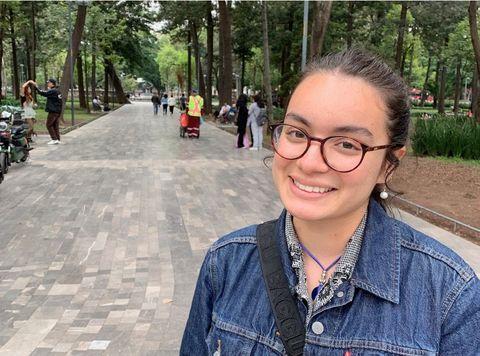
Grounded in visual sociology, film studies, tourism studies, and critical urban geography, Jacqueline's film project offers an audiovisual postcard of the Coyoacán neighborhood in south Mexico City. Inspired by the collaborative, community-based documentary style taught by course instructor Isabel Sanginés Franco, Jacqueline narrated the histories, contradictions, and subaltern realities of the community where they lived. With static street photography at its center, the film captures buildings, signs, statues, and residents to examine a historic alcaldía situated at the crossroads of global tourism, state-sponsored narratives, and a working-class underbelly. Layering pensive spoken reflections over still imagery and ambient sound, the project serves as an experimental landscape and essay film that engages broader questions of urban life, nationalism, and touristification across Mexico and Latin America.
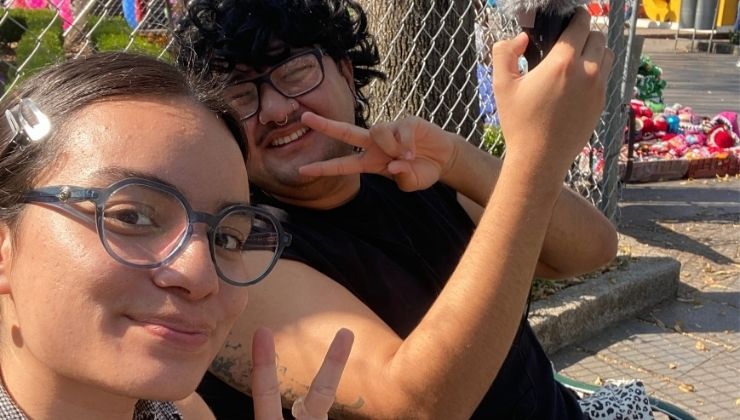
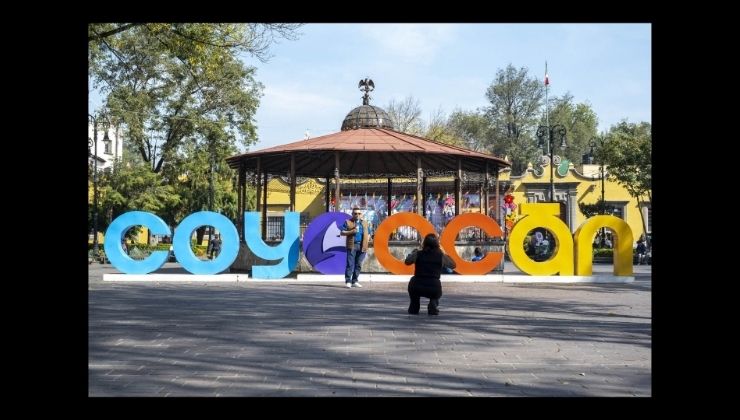
Field research proved invaluable for exploring the film's core themes of urban disparities and tourism. Wandering the streets of Coyoacán and taking in the city's natural rhythm were essential prerequisites for the work. Rather than viewing these dynamics as data on a page, I encountered Mexican street vendors, buskers, waste collectors, and North American travelers firsthand. Ultimately, the project came together thanks to the supportive environment of my Visual Sociology class at the National Autonomous University of Mexico (UNAM). Grounded in urban geography, sociology, and film studies, the piece took shape through regular collaboration with my classmates and instructor, photojournalist Isabel Sanginés Franco.
Jacqueline Canchola-Martinez