
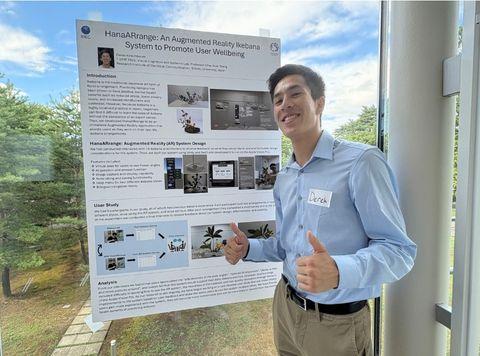
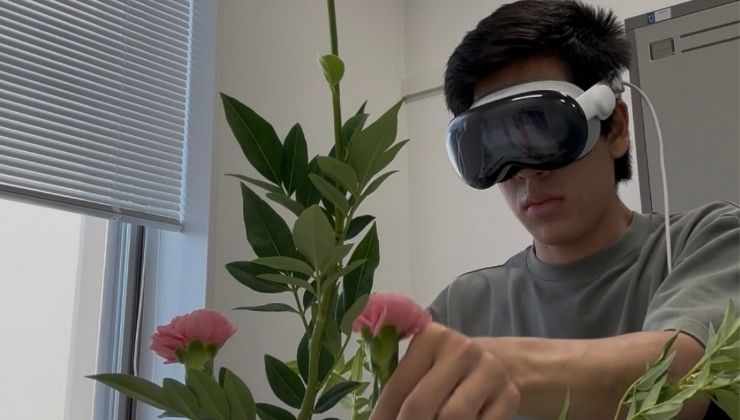
Ikebana, the Japanese art of flower arrangement, offers practitioners significant mental health benefits, yet daily practice is often limited by a lack of guidance and resources. This project explores how augmented reality (AR) in combination with AI can address these accessibility challenges to support ikebana self-practice. Based on a formative study interviewing 14 students and instructors on their ikebana experiences and challenges, the researchers designed HanaARrange, an AR system providing visual and verbal guidance as users arrange real-life ikebana. In a user study with nine participants, the researchers found that HanaARrange outperformed traditional self-practice in achieving correct basic ikebana forms, while offering comparable mental well-being benefits. Iterative refinements conducted with six more experienced learners identified recursive use patterns and future opportunities. The project contributes insights into a design framework for supporting intangible cultural heritage practices, expanding the ikebana ecosystem beyond constraints of physical lessons while supporting mental well-being and quality of life.
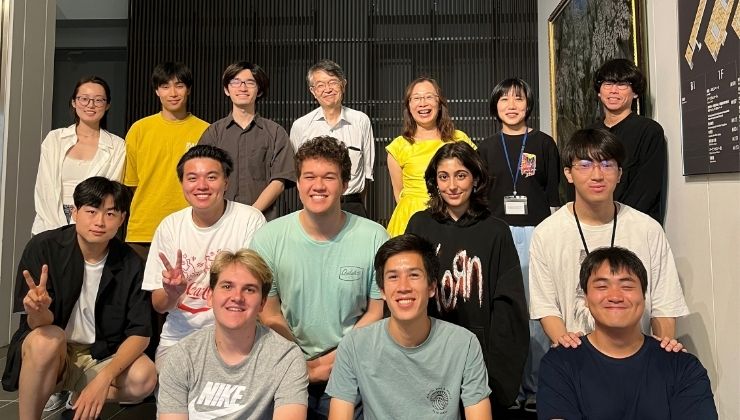
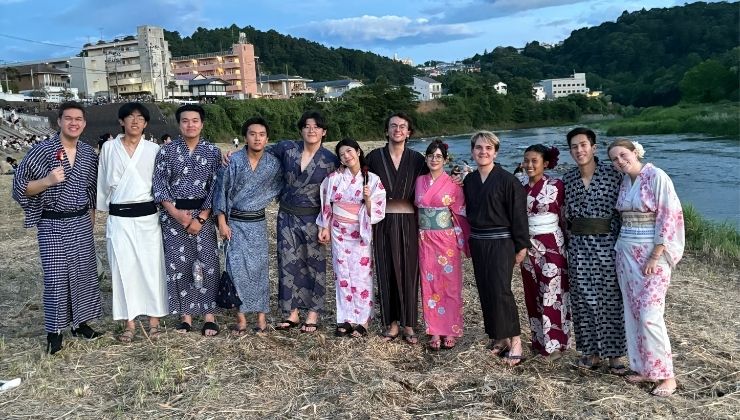

Direct access to Tohoku University researchers, the local ikebana community, and mentors who understood the practice's cultural significance made this research possible in a way that would have been difficult to reproduce in the US. Seeing an idea progress from early interviews to a working system, a completed study, and an internationally recognized publication changed what was possible to contribute as an undergraduate, replacing the assumption that years of additional schooling were required with the confidence to conduct meaningful research. Stepping outside familiar settings proved transformative, teaching that impactful technology begins with understanding the people who use it and demonstrating how digital tools can accompany embodied cultural learning without replacing physical practice or human mentorship.
Derek Kirschbaum