
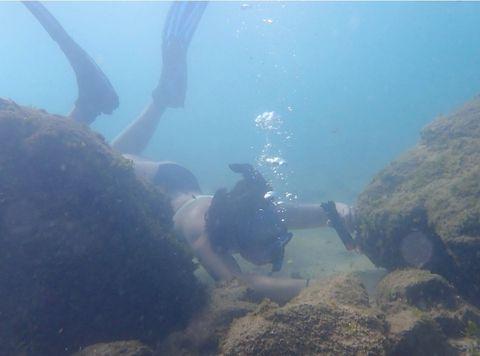
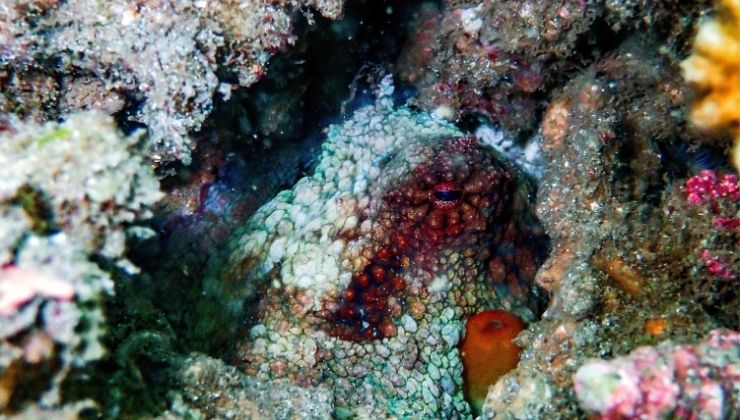
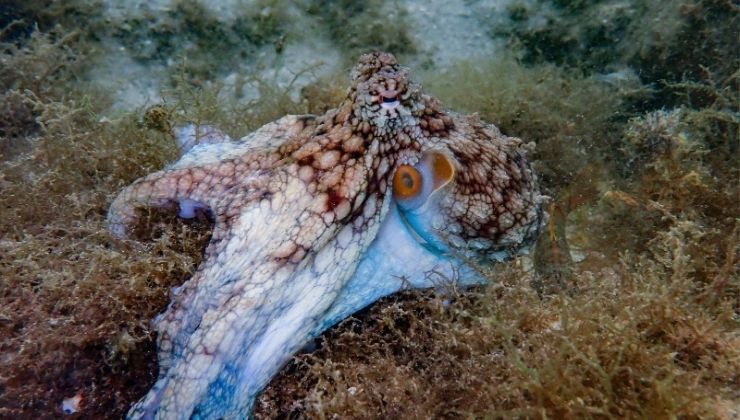
Octopuses are intelligent and flexible cephalopods that play an important role as mesopredators in marine ecosystems. Octopus-fish foraging relationships are important for understanding interspecies interactions within marine communities but are understudied in tropical ecosystems. A deeper understanding of these interactions is essential for assessing the extent to which species diversity supports key ecosystem functions. This study investigated the prevalence of fish following the Gould octopus (Octopus mimus) during foraging trips in Cuajiniquil, Guanacaste, Costa Rica. Snorkeling observations and GoPro recordings were used to document daytime foraging of O. mimus, focusing on the presence or absence of follower fish as octopuses left or returned to designated dens. O. mimus displayed a saltatory foraging strategy, frequently enveloping rocks with its web and arms. Barred serrano (Serranus psittacinus) was observed following O. mimus during foraging trips by lunging at prey items flushed out by the octopuses. These observations represent the first documented instance of S. psittacinus following O. mimus, highlighting a previously unrecognized ecological interaction in tropical reef ecosystems.

Completing a project independently—from asking the initial question and developing field methods to reviewing primary literature and writing a manuscript—proved to be an essential opportunity to discover potential as an independent researcher. Beyond the rigorous fieldwork and unexpected discoveries on the reef, the immersive experience in Costa Rica solidified a passion for the research process and defined the decision to pursue a PhD in marine community ecology. Working directly in the field, collaborating with local fishermen, and learning from supportive mentors provided the drive and direction that ultimately shaped a clear path as a scientist.
Taryn Hozdic