Academics
Fields of Study: Biological Sciences; Environmental Studies; Interdisciplinary Studies
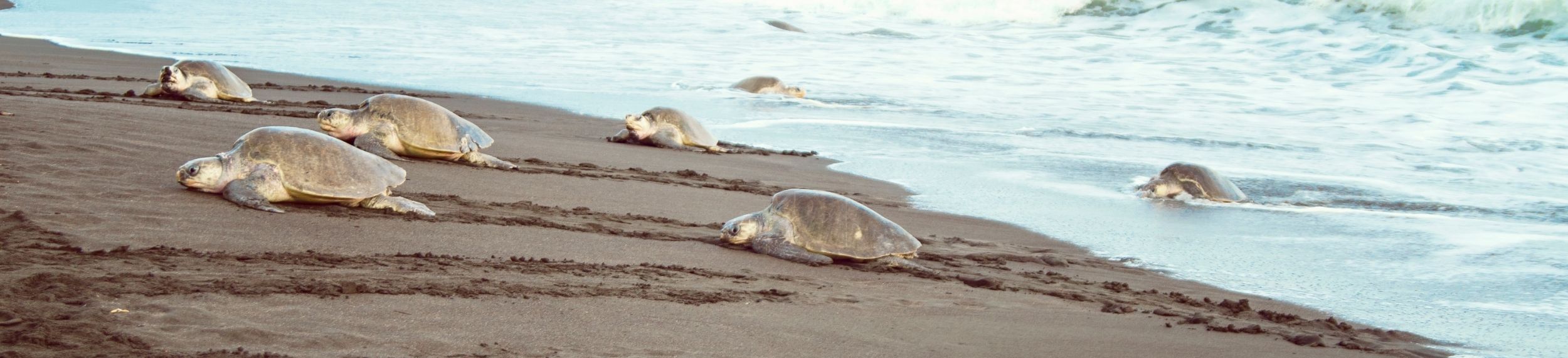
This summer program combines biological field research, community-based conservation, sustainability, and interdisciplinary coursework in the coastal region of Guanacaste, Costa Rica. You will visit a variety of locations, beginning in Ostional, one of the pre-eminent locations of sea turtle mass nesting events in the world. You will continue your studies in ecological monitoring and community sustainability initiatives in San Juanillo, Santa Rosa, and other locations in the Guanacaste Conservation Area.
On this program, you will engage in rotating academic, field, and community-based modules, including homestay immersion, data collection at protected sites, group conservation projects, interdisciplinary seminars, and applied governance and policy activities.
Unique Study Opportunities
- Field experience: monitor nesting sea turtles and conduct habitat assessment
- Build research and biometric data collection skills; receive training in research methods and presentation
- Socio-ecological field studies across national parks
- Practical experience in environmental policy analysis and program design
- Develop case management critiques and proposals using real data that you have collected
Language
Language of Instruction: EnglishLanguage Study: None.
Courses and Credit
Requirements while Abroad
To successfully complete this program:
- Take a full-time course of study: 2 courses for a total of 9 quarter/6 semester UC units.
- Pass/No Pass Requirements:
Current Program Courses
- Biology of Sea Turtles: From Evolution to Conservation Science: 4.5 UC quarter/3.0 UC Semester units, upper division
- This course provides an in-depth examination of the biology of sea turtles, integrating behavioral, ecological, physiological, and evolutionary perspectives to understand how these organisms function in marine and coastal environments. Through lectures, hands-on
field laboratories, data collection, discussions, and case studies, students explore the biological foundations that underpin sea turtle conservation and management through time. Classes include a combination of lectures, discussions of scientific literature, and
applied learning activities. - Policy, Economics, and Psychology of Sustainable Decision Making: 4.5 UC quarter/3.0 UC Semester units, upper division
- Sustainability challenges arise from the complex ways humans depend on and interact with nature. This course examines those intricate relationships, how societies perceive and value natural systems, and how policies, economic tools, and social incentives can be
designed to guide behavior toward more sustainable outcomes.Classes include a combination of instructor-led lectures, guided discussions of scientific literature, interactive games and simulations, collaborative workshops, policy design exercises, and group activities.
Course Restrictions
A background in Biological Sciences and/or Environmental Studies is recommended but not required.
Catalogs and Resources
- UCEAP Course Catalog: See a list of courses students have taken on this program. This is not a current representation of course offerings on this program.
- Campus Credit Abroad: Learn the types of credit (major, minor, general education, elective) students from your campus received at this location. There are currently no listings for this program in the database.
Academic Culture
The Marine Conservation of Sea Turtles program includes academic, field, and community-based modules, including homestay immersion, data collection at protected sites, group conservation projects, interdisciplinary seminars, and applied governance and policy activities. You will be part of a small cohort with a low instructor to student ratio.
The majority of the program’s instruction will take place in facilities and locations in Ostional and San Juanillo, with week-long visits to the dry forest of Santa Rosa National Park and the rainforest Rincón de la Vieja National Park in Guanacaste. You will travel between locations via private transportation and staff will accompany you at all times during organized travel (in addition to instructors).
Grades
You will earn direct UC credit and grades for all coursework.
Summer grades are typically available in mid-September to mid-October.
Tip: If you intend to put yourself on your campus degree list for graduation while on UCEAP, consult your campus advisors before departure about possible delays in the degree verification process.